

Why Your Termbase Is a Dumpster Fire
(And How to Fix It)

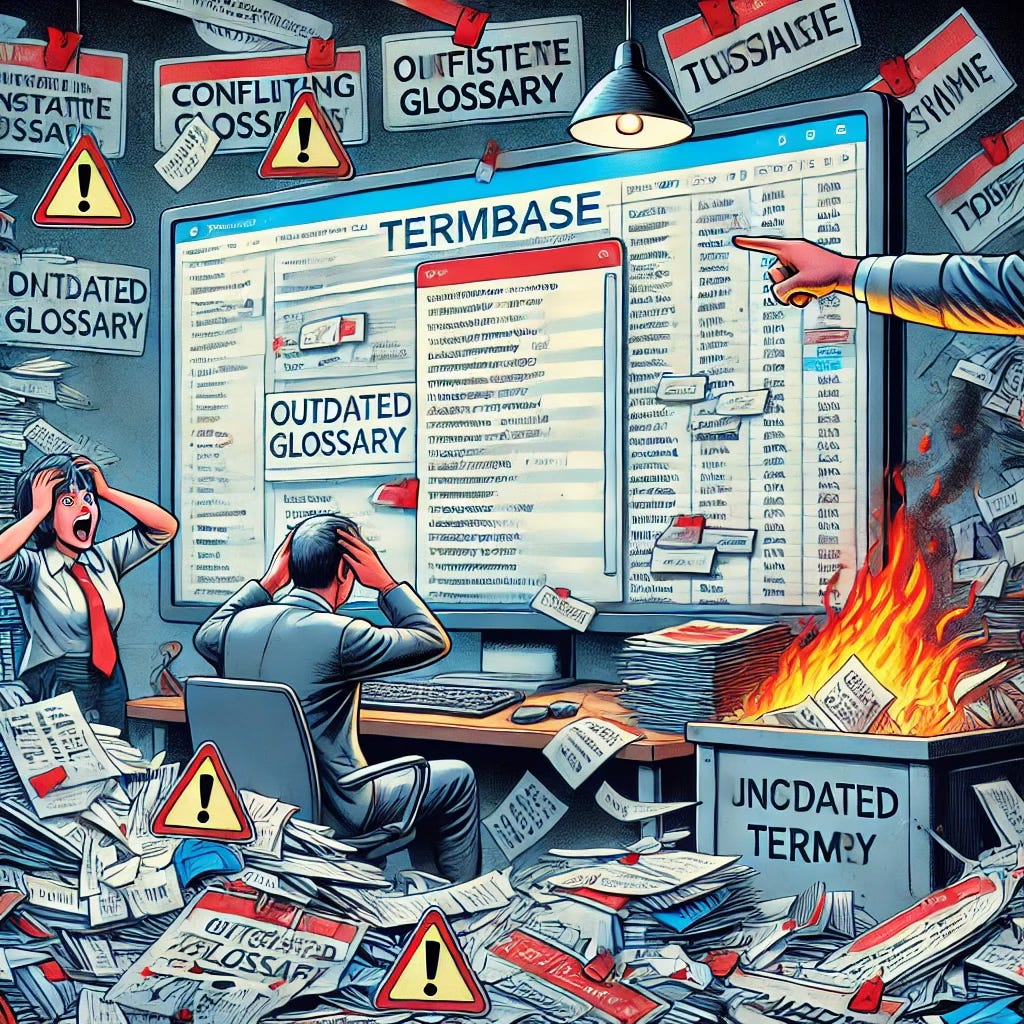
Your termbase is a mess, isn’t it?
You don’t have to say it—I already know.
Half the terms are outdated.
The other half don’t make sense in context.
Nobody follows the damn thing anyway.
And yet, every time you try to enforce terminology consistency, you hit the same walls: stakeholders with conflicting opinions, translators ignoring the termbase (because let’s be real, it’s unusable), and project managers who think "just use machine translation" is a viable solution.
Let’s talk about why most termbases suck—and how to fix yours.
Why Most Termbases Are Broken
1️⃣ They’re Not Actually Useful
A termbase isn’t just a list of words. It needs clear definitions, usage examples, and context. If a translator has to guess what a term means, the termbase has failed.
2️⃣ Nobody Updates Them
Terminology isn’t static. Words evolve, brands pivot, and industry jargon shifts. If your termbase hasn’t been touched since 2019, it’s probably full of outdated garbage.
3️⃣ They’re Too Hard to Access
Raise your hand if your company’s glossary is buried in an Excel file from five years ago. If the termbase isn’t integrated into your workflow, it’s dead weight.
4️⃣ There’s No Buy-in from Translators
If linguists don’t trust the termbase, they won’t use it. And if they don’t use it, what’s the point?
How to Fix Your Dumpster Fire of a Termbase
1️⃣ Make It User-Friendly: Ensure every term has a clear definition, a usage example, and information about what NOT to do.
2️⃣ Keep It Alive: Assign someone to review and update the termbase regularly. Dead terminology is worse than no terminology.
3️⃣ Integrate It Into Workflows: A termbase shouldn’t live in a forgotten spreadsheet. Make sure it’s accessible in your CAT tools and project management platforms.
4️⃣ Get Translators Involved: They’re the ones using it—let them contribute and refine terms based on real-world use.
A termbase should be a tool, not an obstacle. Treat it like a living resource, and you’ll stop fighting the same battles over and over again.
💬 Tell me—what’s the worst terminology disaster you’ve dealt with? Drop it in the comments!